
Tucked away in the lap of the Himalayas, the Kumaon region of Uttarakhand offers not just breathtaking views but also a rich culinary heritage. Influenced by the terrain, climate, and local produce, Kumaoni cuisine is simple, wholesome, and packed with earthy flavors. Unlike many Indian cuisines that rely heavily on elaborate spices or cream, Kumaoni food thrives on the natural taste of ingredients, often using minimal seasoning and slow-cooking methods.
Whether you’re a food lover, an experimental home cook, or someone with fond memories of the mountains, these traditional Kumaoni recipes will bring a taste of the hills right into your kitchen.
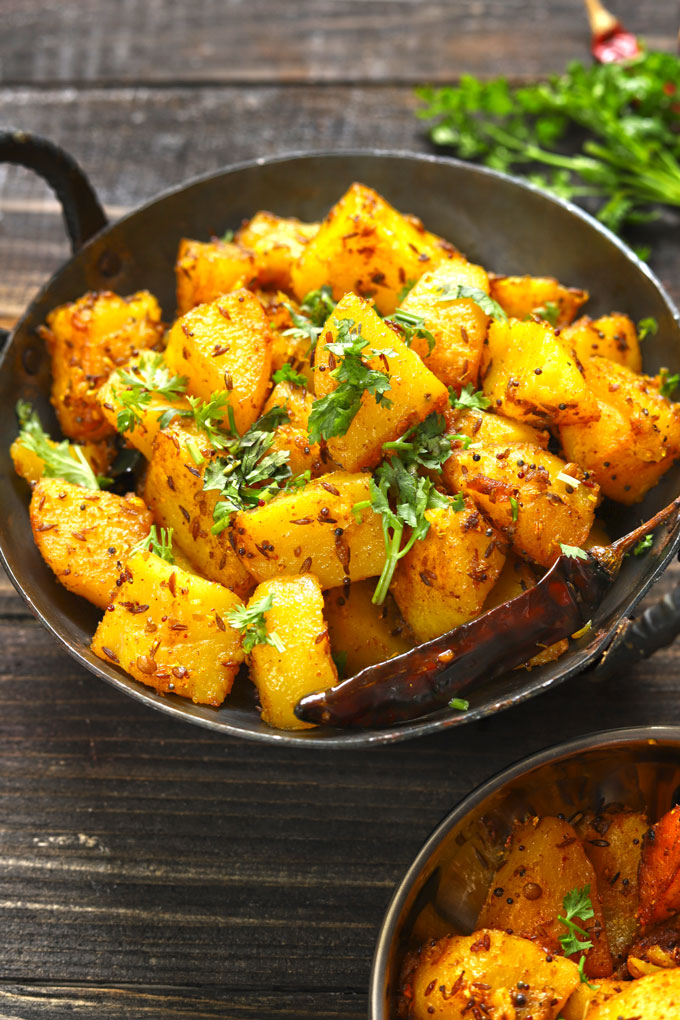
1. Aloo Ke Gutke (Spiced Pahadi Potatoes)
What is it?
Aloo ke Gutke is arguably the most iconic Kumaoni dish. It’s a dry preparation of boiled potatoes tossed with local spices, mustard seeds, and whole red chillies. Served with bhang ki chutney and puri or roti, it’s a local favorite during festivals and village gatherings.
Ingredients:
- 4 medium potatoes (boiled and diced)
- 2 tbsp mustard oil
- 1 tsp mustard seeds
- 2–3 whole dried red chillies
- ½ tsp turmeric
- Salt to taste
- Chopped coriander (optional)
Method:
- Heat mustard oil in a pan until it starts to smoke.
- Add mustard seeds and red chillies. Let them splutter.
- Add turmeric and quickly toss in the potatoes.
- Sauté for 5–7 minutes on medium flame until the potatoes turn golden and slightly crisp.
- Garnish with coriander and serve hot.
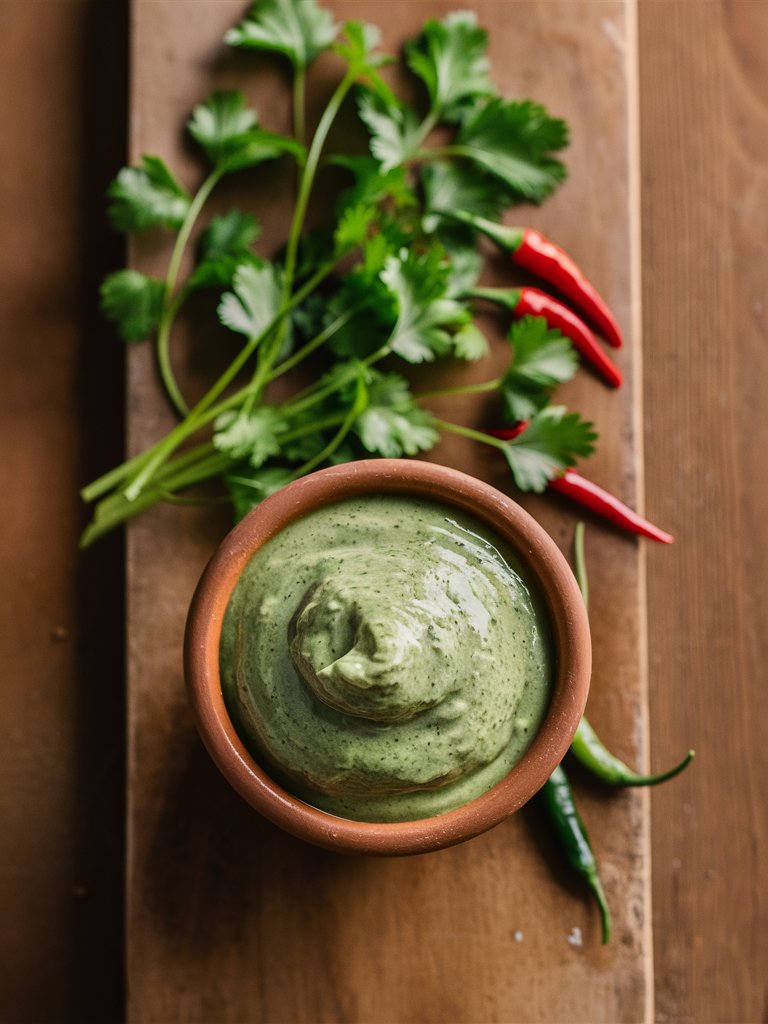
2. Bhang Ki Chutney (Hemp Seed Chutney)
What is it?
This nutty, tangy chutney made from roasted hemp seeds (bhang) is a staple in Kumaoni meals. It pairs beautifully with both rice and snacks and adds a distinctive mountain flavor.
Ingredients:
- 2 tbsp hemp seeds (bhang)
- 1 green chilli
- 2–3 garlic cloves
- Juice of 1 lemon
- Salt to taste
- Water (as needed)
Method:
- Dry roast the hemp seeds until they begin to pop and emit a nutty aroma.
- In a mortar and pestle or grinder, combine the seeds with garlic, green chilli, lemon juice, and salt.
- Grind to a smooth or slightly coarse paste. Add water to adjust consistency.
- Store in an airtight jar and refrigerate. Best consumed fresh.
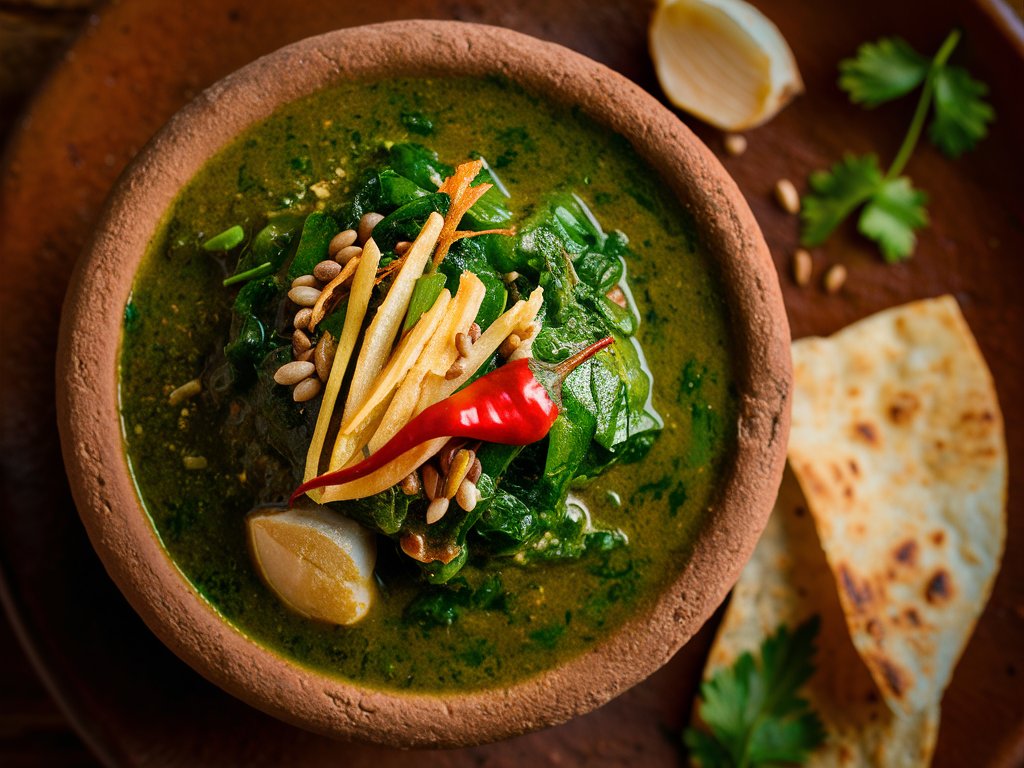
3. Kafuli (Spinach and Fenugreek Curry)
What is it?
Kafuli is a nourishing green curry made with spinach and fenugreek leaves, thickened with rice or wheat flour. It’s the ultimate comfort food during chilly mountain evenings.
Ingredients:
- 2 cups spinach (palak) leaves
- 1 cup fenugreek (methi) leaves
- 2 green chillies
- 1 tbsp rice flour
- 1 tsp ginger-garlic paste
- 1 tbsp mustard oil
- Salt to taste
- A pinch of asafoetida (hing)
- ½ tsp cumin seeds
Method:
- Blanch and grind the spinach, fenugreek, and green chillies to a smooth paste.
- Heat mustard oil, add hing and cumin seeds.
- Add ginger-garlic paste, sauté for a minute.
- Add the green paste and cook on low flame.
- Mix rice flour in ¼ cup water and add to the curry. Cook until thickened.
- Serve hot with steamed rice.
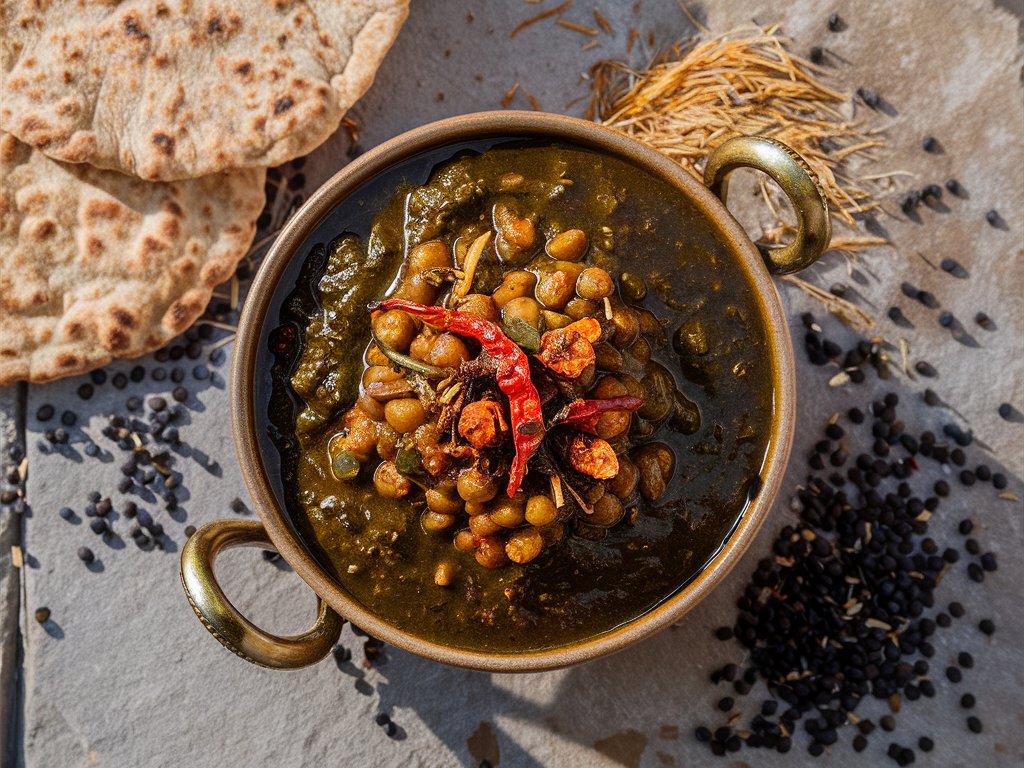
4. Chainsoo (Urad Dal Curry)
What is it?
Chainsoo is a roasted black gram (urad dal) curry, known for its rich, smoky taste. A protein-rich dish, it’s best enjoyed with rice or roti.
Ingredients:
- 1 cup black gram (whole urad dal)
- 1 tbsp ghee or mustard oil
- 1 tsp cumin seeds
- ½ tsp turmeric
- Salt to taste
- Water as needed
Method:
- Dry roast the urad dal in a pan until aromatic and slightly browned.
- Cool and grind coarsely.
- Heat ghee in a pan, add cumin seeds and turmeric.
- Add the ground dal and roast it further with some water to form a thick curry.
- Simmer until the dal is cooked and the flavors are well-blended.
5. Dubuk (Comforting Lentil Stew)
What is it?
Dubuk is a comforting stew made from either bhatt (black soybeans) or gahat (horse gram), often eaten during winters. It has a rustic texture and is usually served with rice.
Ingredients:
- 1 cup bhatt or gahat dal (soaked overnight)
- 1 tbsp rice flour
- 1 tbsp mustard oil
- 1 tsp cumin seeds
- A pinch of asafoetida (hing)
- Salt to taste
- Water as needed
Method:
- Grind soaked dal into a coarse paste.
- Heat mustard oil, add hing and cumin.
- Add dal paste and sauté briefly.
- Add enough water to form a stew. Add rice flour dissolved in water as thickener.
- Simmer for 15–20 minutes.
- Serve hot with rice or mandua (ragi) roti.
6. Jhangora Ki Kheer (Barnyard Millet Pudding)
What is it?
A sweet dish made using Jhangora (barnyard millet), this pudding is a healthier cousin to rice kheer. It’s commonly prepared during fasts or special occasions.
Ingredients:
- ½ cup jhangora (barnyard millet)
- 1 litre full-fat milk
- ½ cup sugar (or jaggery)
- 4–5 cardamom pods (crushed)
- A handful of chopped nuts (optional)
Method:
- Wash jhangora and soak for 30 minutes.
- Boil milk and add jhangora.
- Simmer on low heat, stirring frequently until millet softens.
- Add sugar and cardamom. Mix well.
- Garnish with nuts and serve warm or chilled.
7. Singori (Cone-Shaped Sweet in Malu Leaves)
What is it?
A festive sweet made from khoya (reduced milk solids) and wrapped in molu leaves, Singori is known for its delicate texture and aromatic flavor from the leaf.
Ingredients:
- 1 cup khoya (mawa)
- ¼ cup powdered sugar
- Cardamom powder
- Malu or banana leaves (cut into small cone shapes)
Method:
- Roast khoya on low heat until it turns light golden.
- Let it cool, then mix in sugar and cardamom.
- Fill this mixture into small cones made from leaves.
- Chill for a few hours before serving.
8. Thechwani (Radish and Potato Curry)
What is it?
Thechwani gets its name from “thinchna” or crushing—radish or potatoes are roughly crushed rather than chopped. It’s a spicy, earthy curry cooked with local spices.
Ingredients:
- 1 medium radish (mooli), peeled and crushed
- 2 small potatoes, peeled and crushed
- 1 onion (optional)
- 2 green chillies
- 1 tsp ginger-garlic paste
- ½ tsp turmeric
- 1 tsp cumin seeds
- 1 tbsp mustard oil
- Salt to taste
Method:
- Heat mustard oil, add cumin seeds.
- Add ginger-garlic paste, onion, and chillies.
- Add the crushed radish and potatoes, turmeric, and salt.
- Cook covered on low heat with a little water until vegetables soften.
- Serve hot with roti or rice.
9. Madua Roti (Finger Millet Flatbread)
What is it?
Madua (finger millet) roti is a nutritious flatbread that’s gluten-free and rich in iron. It’s a staple in rural Uttarakhand and pairs well with lentils and chutney.
Ingredients:
- 2 cups madua (ragi/finger millet) flour
- Warm water as needed
- A pinch of salt
Method:
- Mix flour and salt, then gradually add warm water to knead a soft dough.
- Divide into balls and roll out into rotis (use dry flour to prevent sticking).
- Cook on a hot tawa with or without ghee.
- Serve warm with chutney or curry.
10. Rus (Kumaoni Lentil Broth)
What is it?
Rus is a light, thin broth made by boiling the leftover water (stock) from lentils like bhatt or gahat, often flavored with garlic and spices. It’s a winter favorite.
Ingredients:
- Leftover dal stock (from bhatt/gahat)
- 1 tsp garlic paste
- 1 tsp mustard oil
- Cumin and hing for tempering
- Salt to taste
Method:
- In a pan, heat mustard oil and temper with cumin and hing.
- Add garlic paste and sauté briefly.
- Add the lentil stock, adjust salt, and boil for a few minutes.
- Serve with rice or as a light soup.
Bringing the Hills to Your Home
Kumaoni cuisine is a reflection of the land it comes from—pure, humble, and deeply nourishing. Most of the ingredients used in these recipes are pantry staples or easily available at local grocers. What makes them special is the method—slow cooking, seasonal produce, and the absence of heavy masalas or cream.
Trying these dishes is more than just a culinary adventure; it’s a journey into the heart of the Himalayas. So put on your apron, channel the spirit of the pahadi kitchens, and bring home the flavors of Kumaon.
Have you tried any of these recipes or visited Uttarakhand recently? Share your experiences or pictures in the comments below!