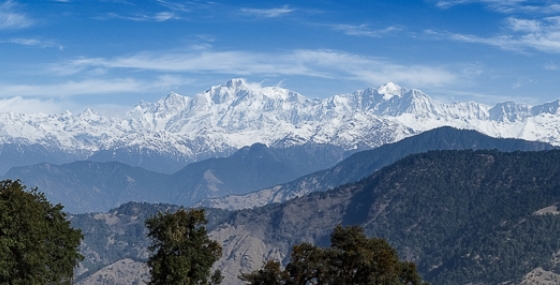
Perched on a sunny ridge in the Kumaon Himalaya, Hartola is one of those Uttarakhand villages where time seems to slow down. Stone paths weave through terraced fields, old apple and peach trees lean over slate roofs, and oak and rhododendron forests stretch across the horizon. Today, Hartola sits within Nainital district, a short drive from Ramgarh and Mukteshwar, and is known for its fruit orchards and quiet, bird-rich woods. But the charm we see today is layered over centuries of history—rooted in early Himalayan kingdoms, shaped by the arrival of new rulers, and enriched by the orchards that transformed the region.
Kumaon Before Hartola: The Katyuri and Chand Legacies
The wider region that cradles Hartola—Kumaon—has a long and colourful past. Centuries ago, the Katyuri dynasty ruled large swathes of the central Himalaya. From their stronghold in the Gomati valley, they encouraged agriculture, temple building, and trade routes that linked the mountains with the plains and beyond. Their influence laid down the patterns of life—farming terraces, village organisation, seasonal fairs—that still echo in the hills.
After the Katyuris, the Chand dynasty rose to prominence, shifting their capital to Almora in the 16th century. They unified Kumaon as a hill kingdom, strengthened trade networks, and patronised art, architecture, and community life. While Hartola itself does not appear in old records, the systems created during Chand rule—agricultural cycles, water management, and village self-governance—formed the foundation for hamlets like Hartola to flourish.
From Gorkha Rule to the British Raj
The late 18th century was a turbulent period. The Gorkhas of Nepal expanded westward, overthrowing the Chand rulers and bringing new demands to the hill people. This period was brief but left a mark, until the British arrived during the Anglo-Nepalese War. With the signing of the Treaty of Sugauli in 1816, Kumaon came under British administration.
For Hartola, this meant a gradual connection to the larger world. British influence brought roads, new administrative systems, forest regulations, and exposure to market economies. Nearby hill towns such as Almora and Nainital began to develop as centres of governance, commerce, and tourism, indirectly affecting rural villages across the region.
Orchards Change the Hills
If there is one chapter that defines Hartola’s modern identity, it is the spread of fruit orchards. The ridge it shares with Ramgarh and the slopes towards Mukteshwar proved ideal for apples, peaches, apricots, and pears. While local varieties had been grown for generations, the British era introduced larger-scale horticulture, with better grafting techniques, new varieties, and improved access to markets.
A significant influence came from nearby Mukteshwar, where the Imperial Bacteriological Laboratory (now the Indian Veterinary Research Institute) was established in 1893. Though its focus was veterinary science, its arrival brought roads, official housing, and a steady flow of visitors. Around the same time, Ramgarh developed a reputation as the “Fruit Bowl of Kumaon,” thanks to its favourable climate, fertile soil, and sun-bathed terraces. Hartola, sharing these same natural blessings, soon became part of this orchard belt.
Colonial bungalows also began to appear in the region, built as summer retreats for officials and missionaries. While Ramgarh became known for its literary and artistic visitors, Hartola retained its rustic quiet, its orchards thriving just beyond the forest edge.
Hartola’s Profile Today
Hartola today is a small gram panchayat village in Nainital district, nestled close to the Mukteshwar Reserve Forest. It lies about 50–60 km from Nainital town and is known for its panoramic Himalayan views on clear days. The village’s modest size is part of its charm—narrow lanes lined with fruit trees, homes built of stone and slate, and a pace of life that follows the rhythm of the seasons.
The surrounding forests are a blend of oak, deodar, rhododendron, and pine. In spring, crimson rhododendron blooms set the hillsides ablaze with colour, while autumn brings crisp air and golden leaves. The biodiversity here is exceptional—birdwatchers delight in spotting flycatchers, barbets, and seasonal migratory species.
Land, Forests, and Everyday Life
To understand Hartola’s history, it helps to picture the village year through its natural cycles. Winter is for pruning and planning; spring for blossoms and bees; summer for the first flush of fruit; monsoon for a burst of greenery; and autumn for harvest. Village institutions such as the panchayat, temple committees, and water-sharing systems keep community life closely tied to the land.
Forests play a vital role in Hartola’s story. Oak forests, in particular, are lifelines—they capture rainwater and feed perennial springs, which in turn sustain orchards, fields, and homes. Over time, villagers have had to adapt to forest laws and conservation efforts, balancing traditional uses with the need to protect these green reserves.
Roads, Markets, and the Journey of Fruit
The journey of Hartola’s fruit is as much about roads as it is about orchards. As connections to the railhead at Kathgodam improved, so did the ability to transport fresh produce to the plains. This meant better prices and more varieties being cultivated. With markets growing in the cities, orchard owners began to experiment with new grafts, pruning techniques, and even small cold-storage arrangements.
In recent years, homestays have become a valuable addition to Hartola’s economy. Visitors from across India come to experience the crisp air, fresh fruit, and peace of village life. Some stay in heritage cottages dating back decades; others choose newer homes built in the traditional stone-and-slate style. For many city dwellers, waking up to the sight of apple blossoms outside the window is reason enough to return.
Hartola in the Larger Kumaon Landscape
While Hartola itself is peaceful and self-contained, it lies within easy reach of several well-known Kumaon destinations. Nainital, with its colonial charm; Almora, with its bustling bazaars and temples; and the spiritual Kainchi Dham are all within a short drive. This proximity allows visitors to combine the calm of Hartola with day trips to more vibrant spots, returning in the evening to the serenity of the village.
Present Day: Conservation, Community, and Responsible Tourism
Like many Himalayan hamlets, Hartola faces the challenge of balancing progress with preservation. Climate change has made seasons less predictable—sometimes blossoms appear too early, or sudden hailstorms damage crops. Young people often leave for education and jobs in the cities, creating questions about the future of orchards and farmland.
Yet there is resilience here. The mixed economy of fruit farming, livestock, seasonal work, and tourism helps sustain livelihoods. The growing focus on responsible tourism—preferring homestays over large hotels, maintaining orchards rather than clearing them, and reviving traditional water-harvesting systems—offers hope that Hartola can retain its character while adapting to change.
Why Hartola’s History Matters
Hartola’s story is not written in grand palaces or famous battles, but in the quiet persistence of its landscapes and people. It is a history of terraced fields that hold the monsoon rains, of apple trees grafted by careful hands, of oak forests that protect the springs, and of communities that have worked with the rhythms of nature for centuries.
For travellers, this history is not something to read in a book—it is something to experience. It is in the taste of a just-picked apricot, the scent of rhododendron on a spring breeze, the sound of a Himalayan thrush at dusk. To walk through Hartola is to step into a living heritage, one that deserves to be cherished and passed on to future generations.